why are my 3d fusion 360 drawings printing thinly
The March 2022 Fusion 360 update brought several enhancements to 3D Sketching. Make sure you accept version two.0.7805 or newer.
Before the update, 3D Sketches were cumbersome and hard to handle. Creating 3D sketches required the employ of the Move command. It proved to be a slow and disruptive process, unlike 3D Sketching from competitors, such every bit Solidworks.
- Sketch Commands Supported by 3D Sketch
- Sketch Constraints Supported by 3D Sketch
- Differences Between 2D and 3D Sketching
- When to Utilise 3D Sketches
- Create a 3D Sketch in Fusion 360
- Practice a 3D Sketch – Sweep a Side Tabular array
Sketch Commands Supported past 3D Sketch
This Fusion 360 update brings new 3D sketching behavior to the post-obit sketch features:
- Line
- Rectangle tools
- Bespeak
- Spline tools
- Circumvolve tools
- Conic Curve
- Ellipse
- Polygon
Sketch Constraints Supported by 3D Sketch
3D Sketches besides support the use of the post-obit sketch constraints:
- Horizontal/Vertical
- Coincident
- Tangent
- Equal
- Parallel
- Perpendicular
- Ready/Unfix
- Midpoint
- Concentric
- Colinear
- Curvature
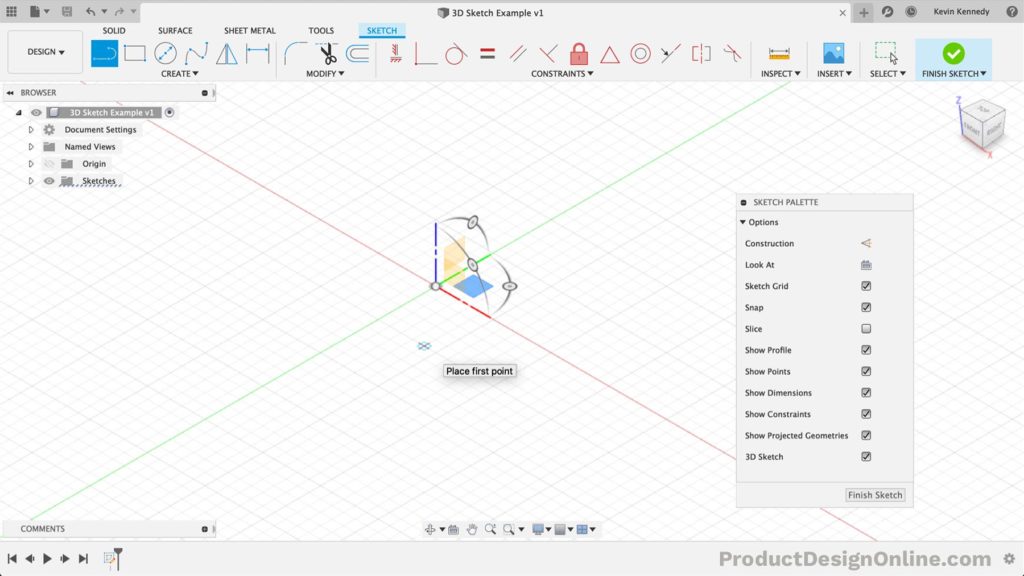
With these enhancements, you lot now immediately see origin axes, planes, and rotational manipulators to help create your 3D sketch.
Moving from one sketch plane to another is equally piece of cake as moving your mouse cursor in the direction yous desire to sketch. Guidelines and then appear to aid you empathize where the sketch is going to exist in 3D infinite.
Differences Betwixt 2nd and 3D Sketching
In a 2d Sketch, we constrain sketch geometry to the plane used to create the sketch. You tin can create a new 2D sketch on each of the following:
- XY, YZ, or XZ origin planes
- Faces
- Structure planes
A second sketch plane can originate anywhere in 3D infinite. Still, the selected plane restricts sketch geometry to that plane.
With a 3D sketch, Fusion 360 removes the planar restriction allowing yous to create sketch geometry anywhere in 3D space.
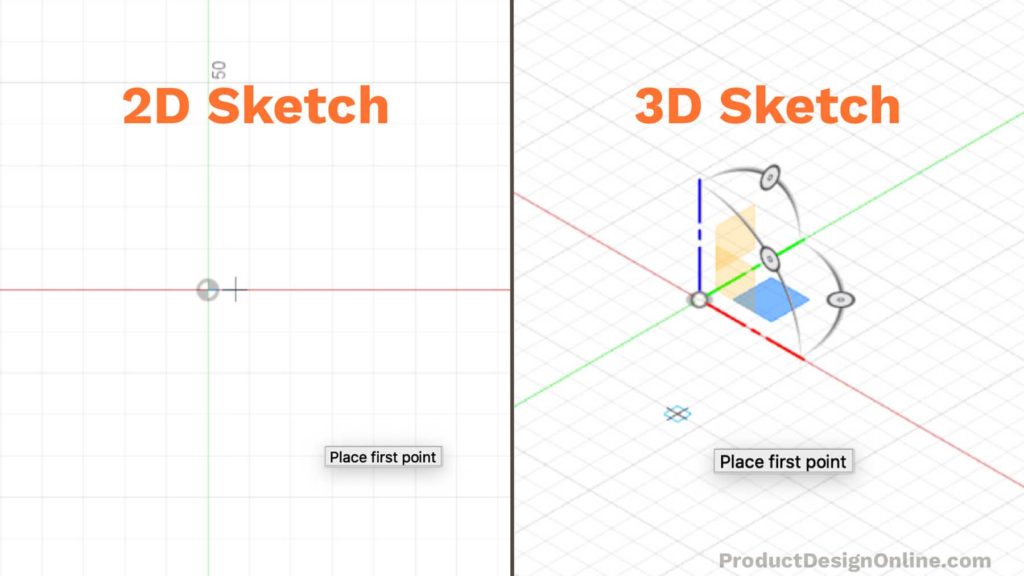
It'south important to annotation that 2d sketches also exists as an individual Sketch feature in the parametric timeline. You'll frequently have several different sketch features that make up a design.
Contrary, 3D sketches will be i single sketch feature in the timeline.
Sketch dimensions and constraints tin sometimes be harder to update and manage with 3D sketches – making the concept ofdesign intent harder.
Knowing when to use a 3D sketch instead of a 2d sketch can make all the departure.
When to Use 3D Sketches
In that location's no question that 3D sketches come with actress complication. That may accept you wondering, "When should I utilise a 3D Sketch?"
In brusque, utilise a 3D sketch to create a path for tubing, sweeps, lofts, or surface edges, when the design continues to multiple planes.
Use a 2nd Sketch to create planar (flat) sketch geometry for common features similar extrude and revolve.
3D Sketches are also proficient for:
- Routing
- Sweep Path
- Guide Curve
- Surface Extrudes
- Curve-Driven Patterns
- Split (Body) Lines
- Assembly skeletons
In summary, use a 3D sketch if it volition save time creating the model when compared to using traditional planes and 2d Sketches.
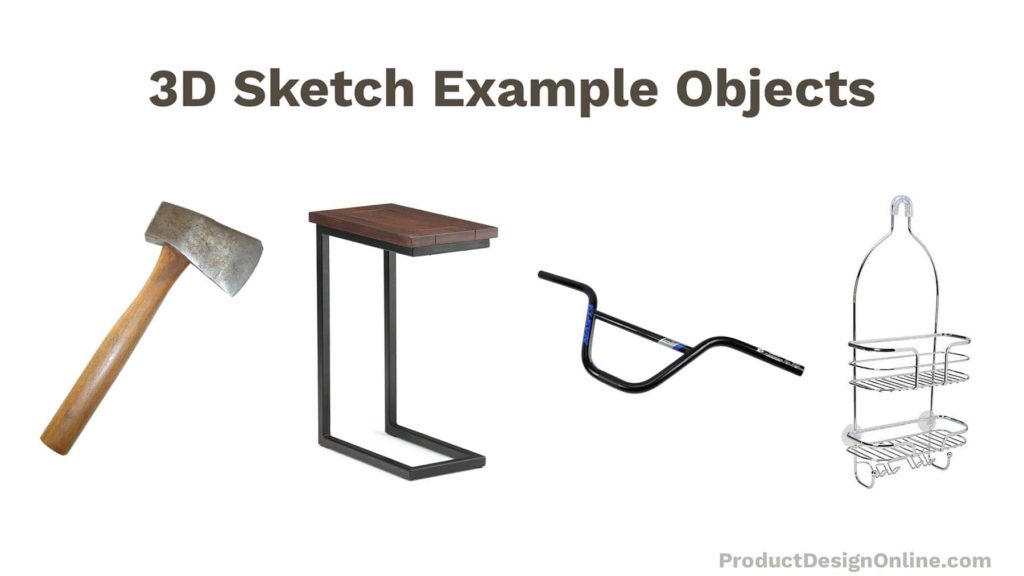
3D sketch example objects:
- Bike handlebars
- Shower caddy
- Axe head
- Piece of furniture with continuous shapes
Create a 3D Sketch in Fusion 360
- Select theSolid tab in theDesign workspace. SelectCreate Sketch in the toolbar.
- Select the initial airplane or face up to brainstorm the sketch on.
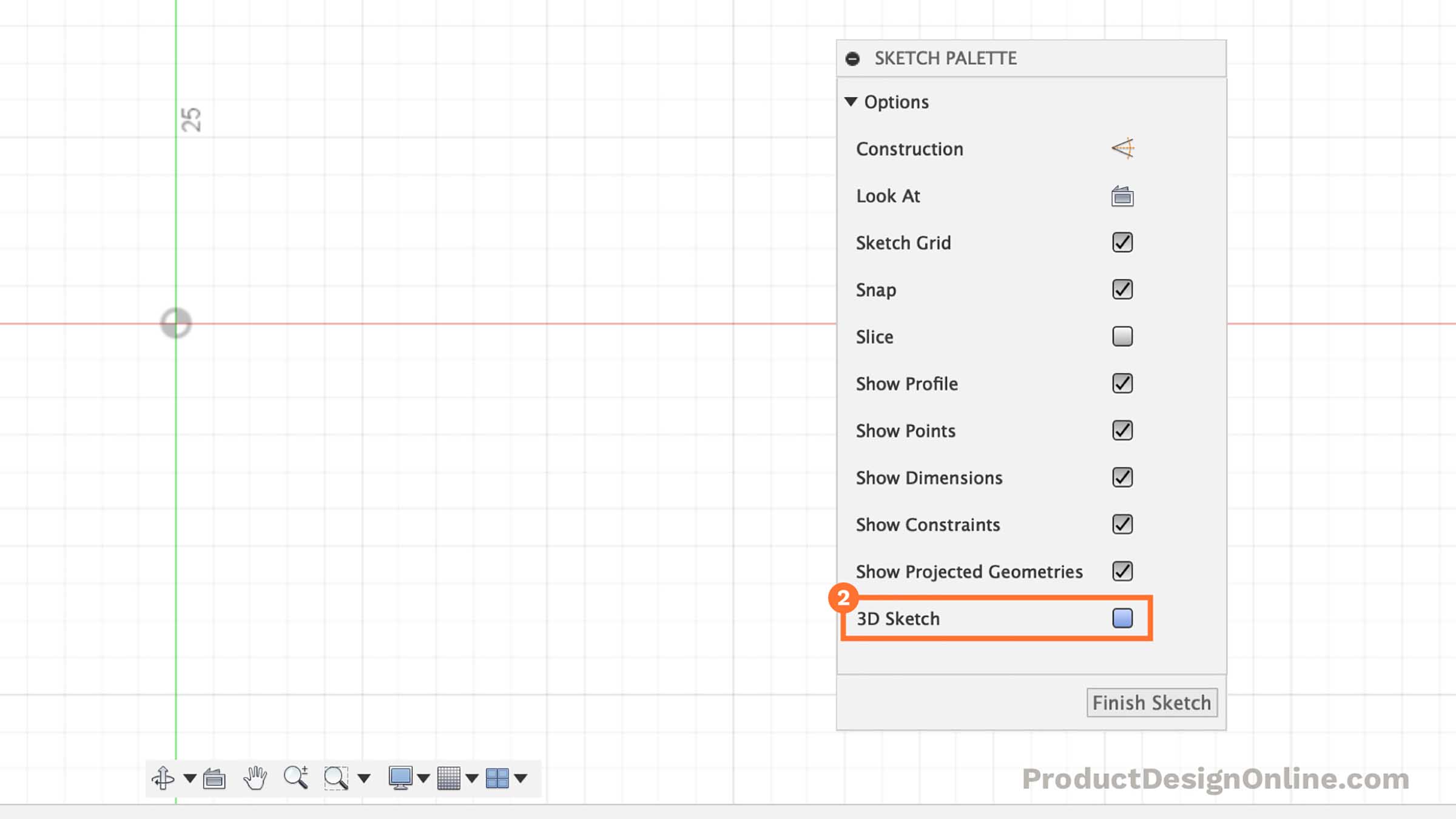
- Bank check the3D Sketch box in theSketch Palette.
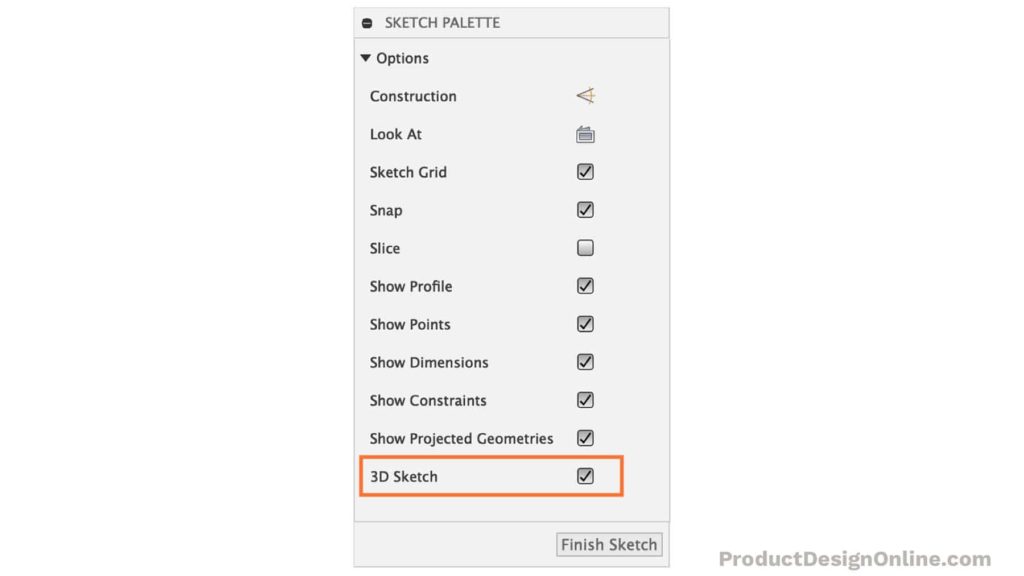
- Select one of the sketch commands supported by3D Sketch. The 3D Sketch Manipulator will appear at the default location (0,0,0).
- Select a sketch plane or adjust the3D Sketch Manipulator. If desired, switch to a dissimilar sketch plane by selecting it (XY, YZ, or XZ) or rotate the sketch aeroplane by dragging any rotation handle.
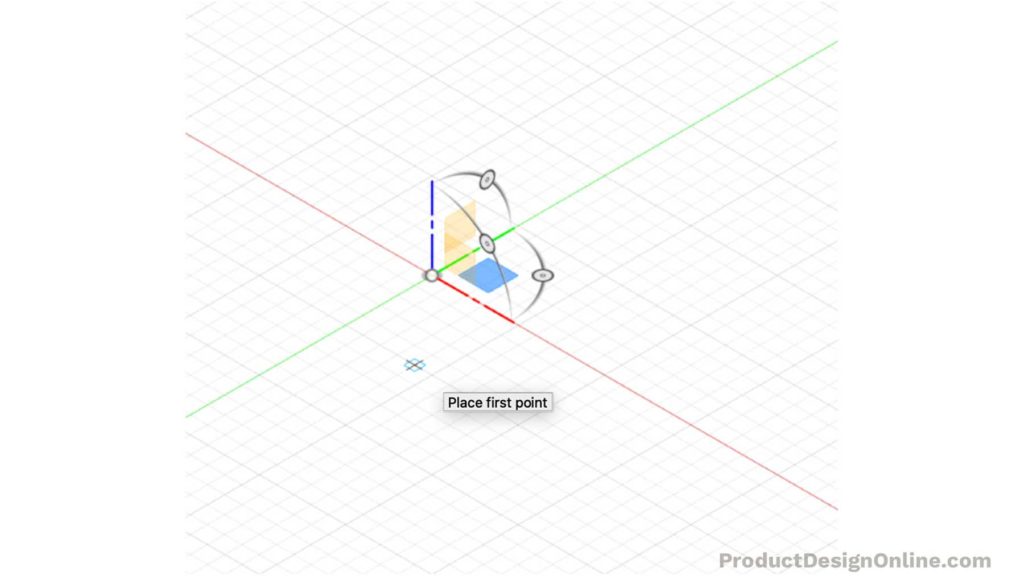
- Click anywhere on the active sketch aeroplane to create the first sketch indicate. Hover forth the axis until its extension line displays, then click to place the bespeak to restrict the betoken along an axis.
- Continue to place sketch points as desired. The origin of the3D Sketch Manipulator will shift to the terminal point you placed, as you lot identify 3D sketch points.
- ClickFinish Sketch in the toolbar to stop the sketch.
Practice 3D Sketch – Sweep a Side Tabular array
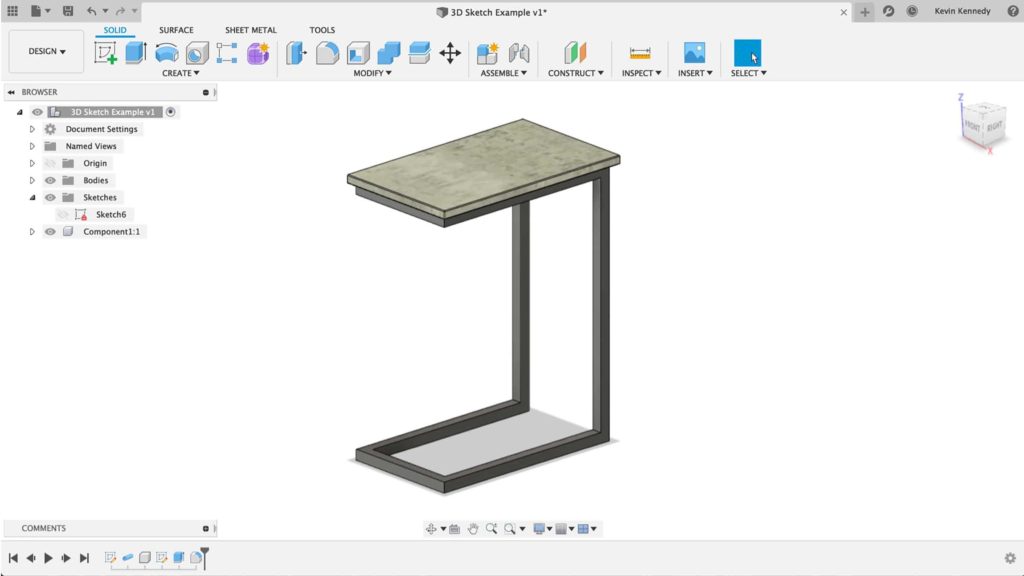
Time needed:20 minutes.
I happened to come up across this "C Side Table" on Amazon and idea it was the perfect 3D Sketch beginner project.
This table blueprint could theoretically use 2D Sketches. Still, nosotros tin can make the tablemuch faster using 3D sketches.
- SelectCreate Sketch in the toolbar
Start the sketch past selecting the XY origin airplane. Nosotros'll click this plane to beginning by cartoon the lesser of the table as if it were sitting on the basis.
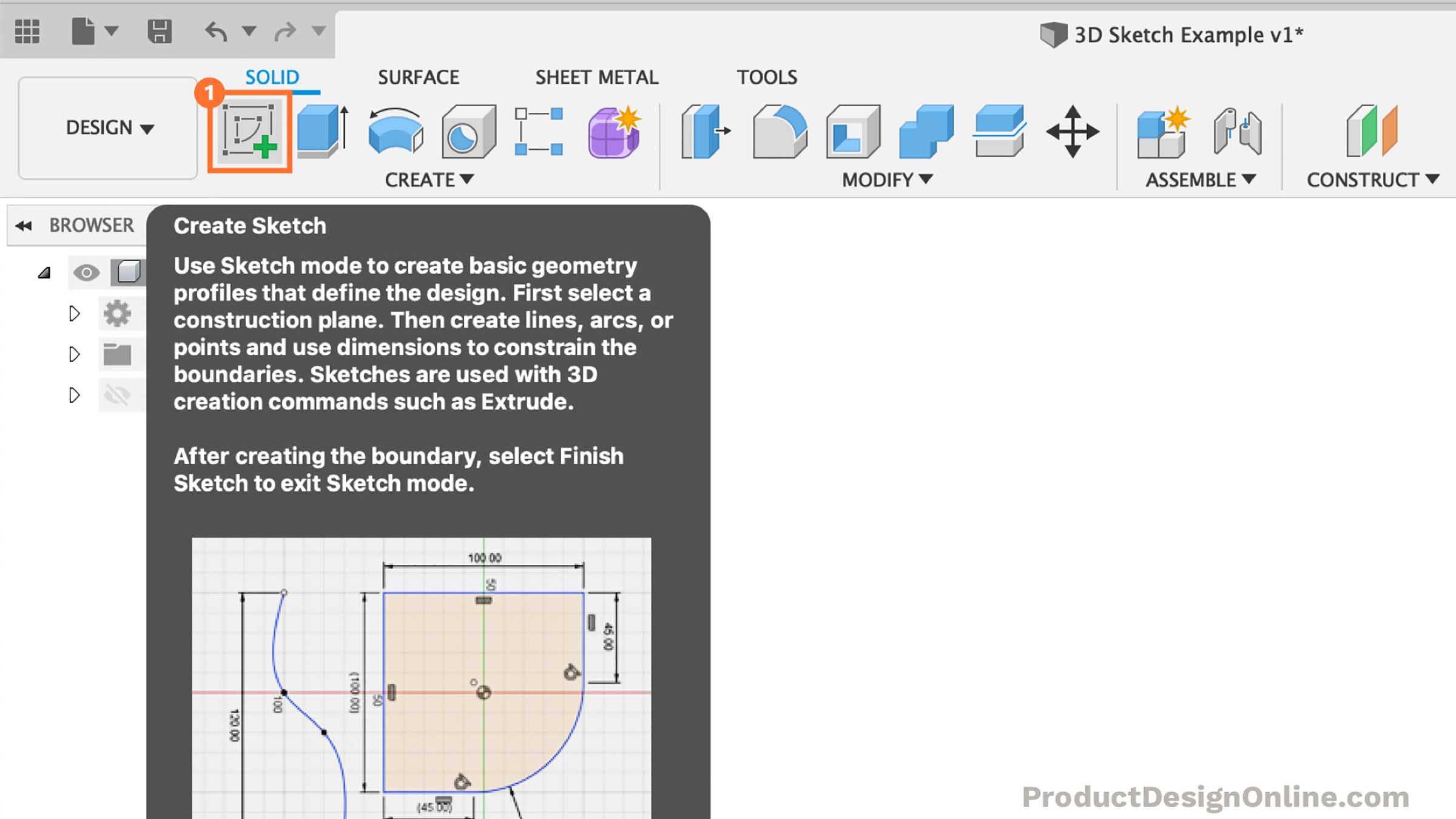
- Turn on 3D Sketch
Select the 3D Sketch checkbox in the Sketch Palette to turn information technology on.
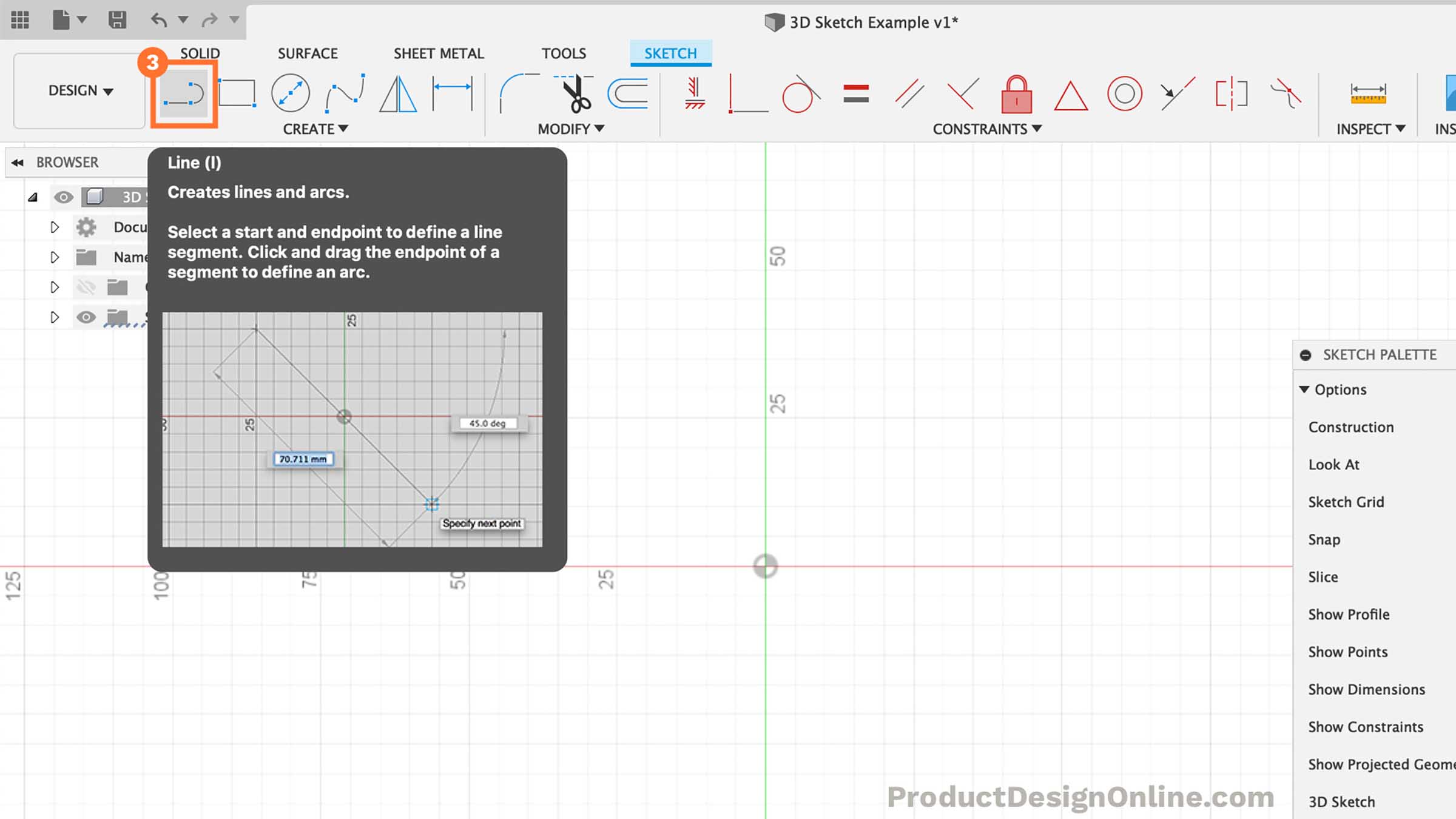
- Actuate Line & Home View
Select the line feature in the toolbar or hit the keyboard shortcut "Fifty." Select the "Domicile" position adjacent to the ViewCube. This will assist u.s. sketch in 3-dimensions.
- Draw First Line from Origin
At this point, nosotros can start the line by setting the starting time point at the origin point.
Similar to a 2D sketch, we will elevate our mouse cursor along the green Y-centrality. Blazon out 45cm for the length and then click where the line snaps into the Y-axis. Fusion 360 will automatically add a "horizontal/vertical" constraint for us.
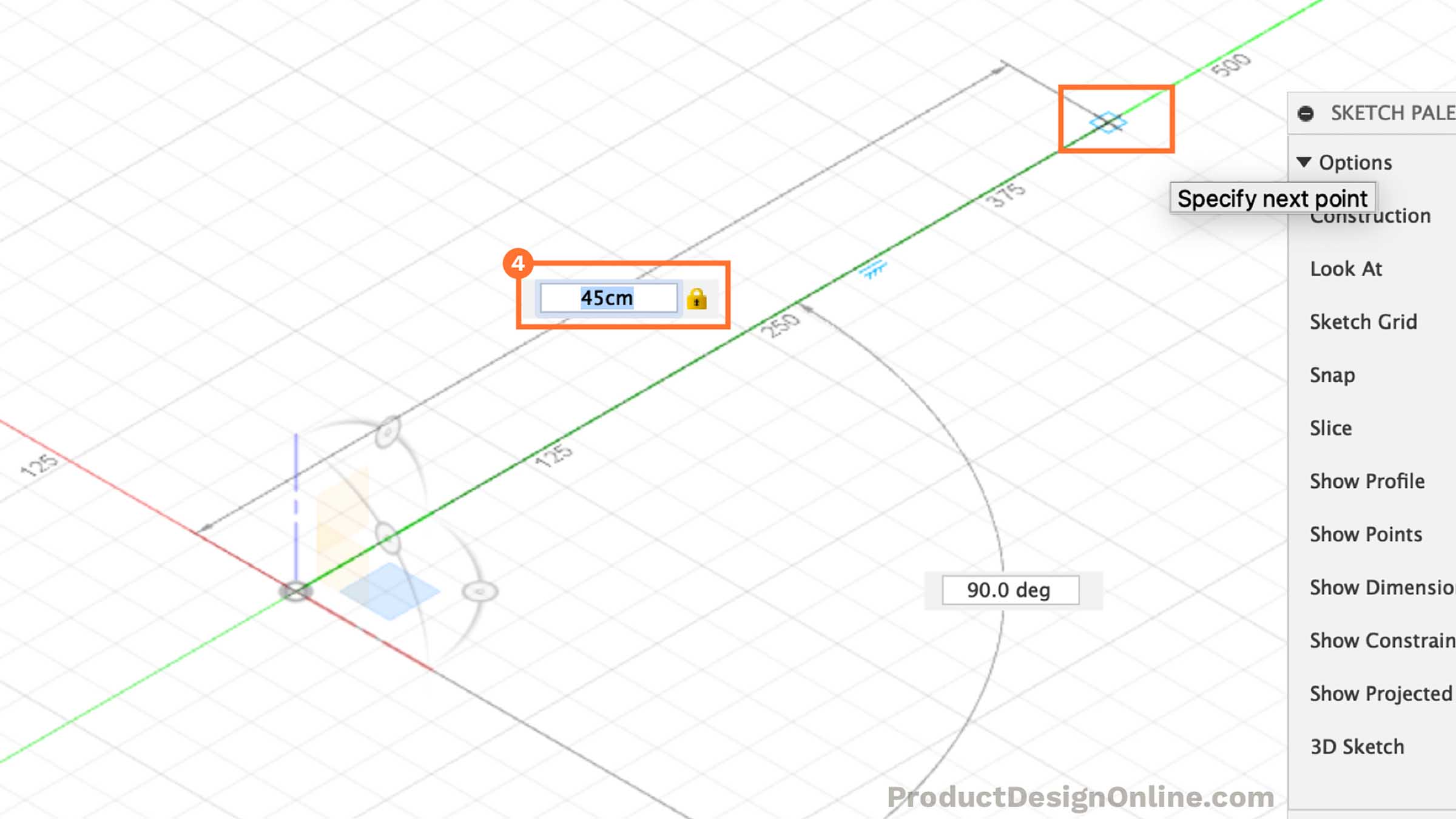
- Depict Line Straight Up
We can start to sketch the height of the tabular array by moving our mouse cursor to the blueish z-axis. The cursor should snap to the z-centrality when close.
Blazon out 60cm for the height. Carefully select the blue z-axis to set the line, making sure it automatically add a vertical constraint.
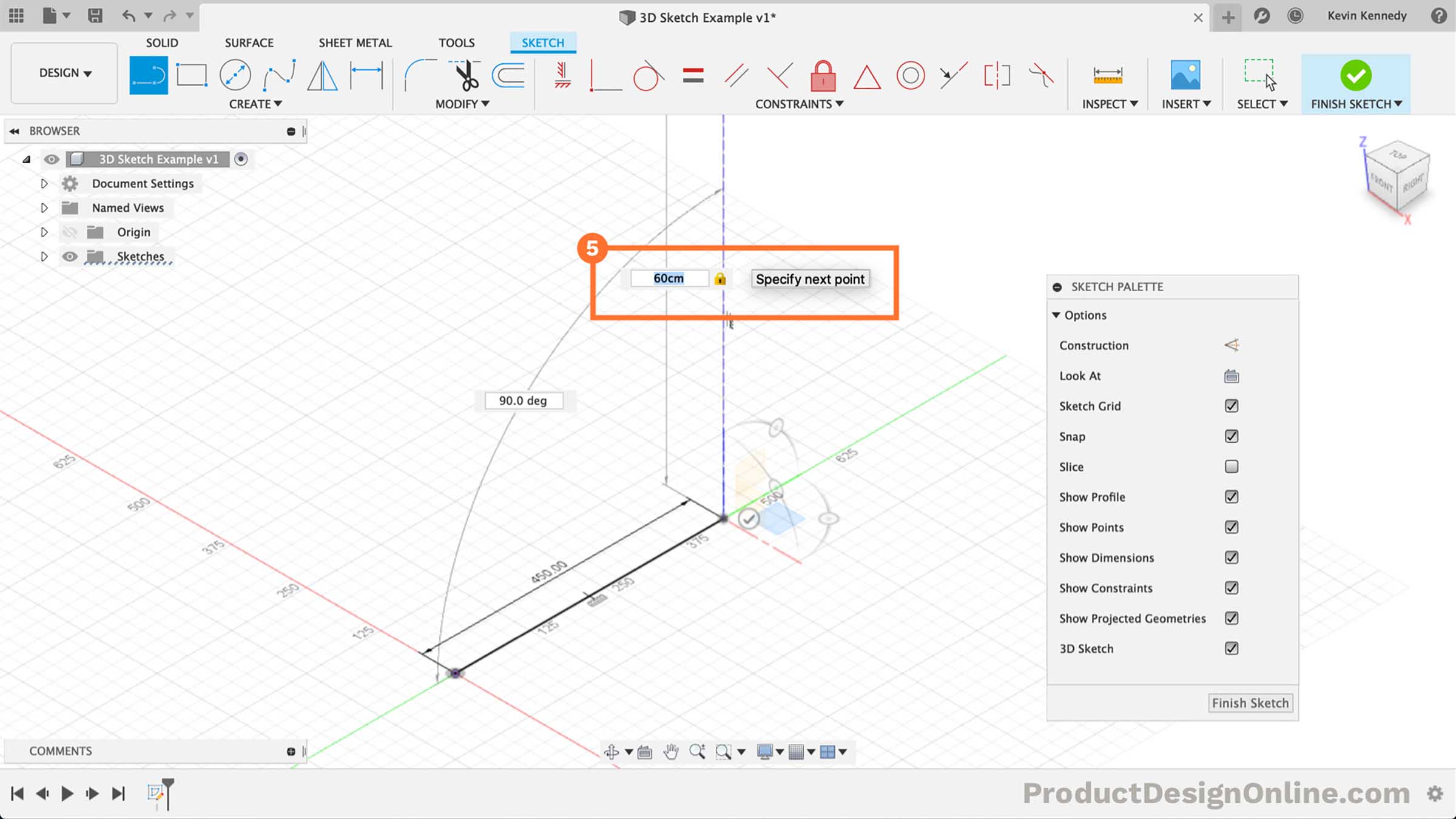
- Heading Back Toward Center
For the third line, we'll want to head back toward the center, while following the green y-axis. If you haven't already noticed, run into that the origin planes move to the end of our line while in 3D sketch mode.
This is where things start to go catchy with 3D Sketches. We don't want to overuse sketch dimensions. Instead of typing out a dimension, click to place the line along the y-axis.
Shift-click the endpoints of the line we just placed and the origin betoken or the original starting point of our start line. Select the "horizontal/vertical" constraint in the toolbar. This will ensure they stay the same length while making it easy for the states to update only one dimension.
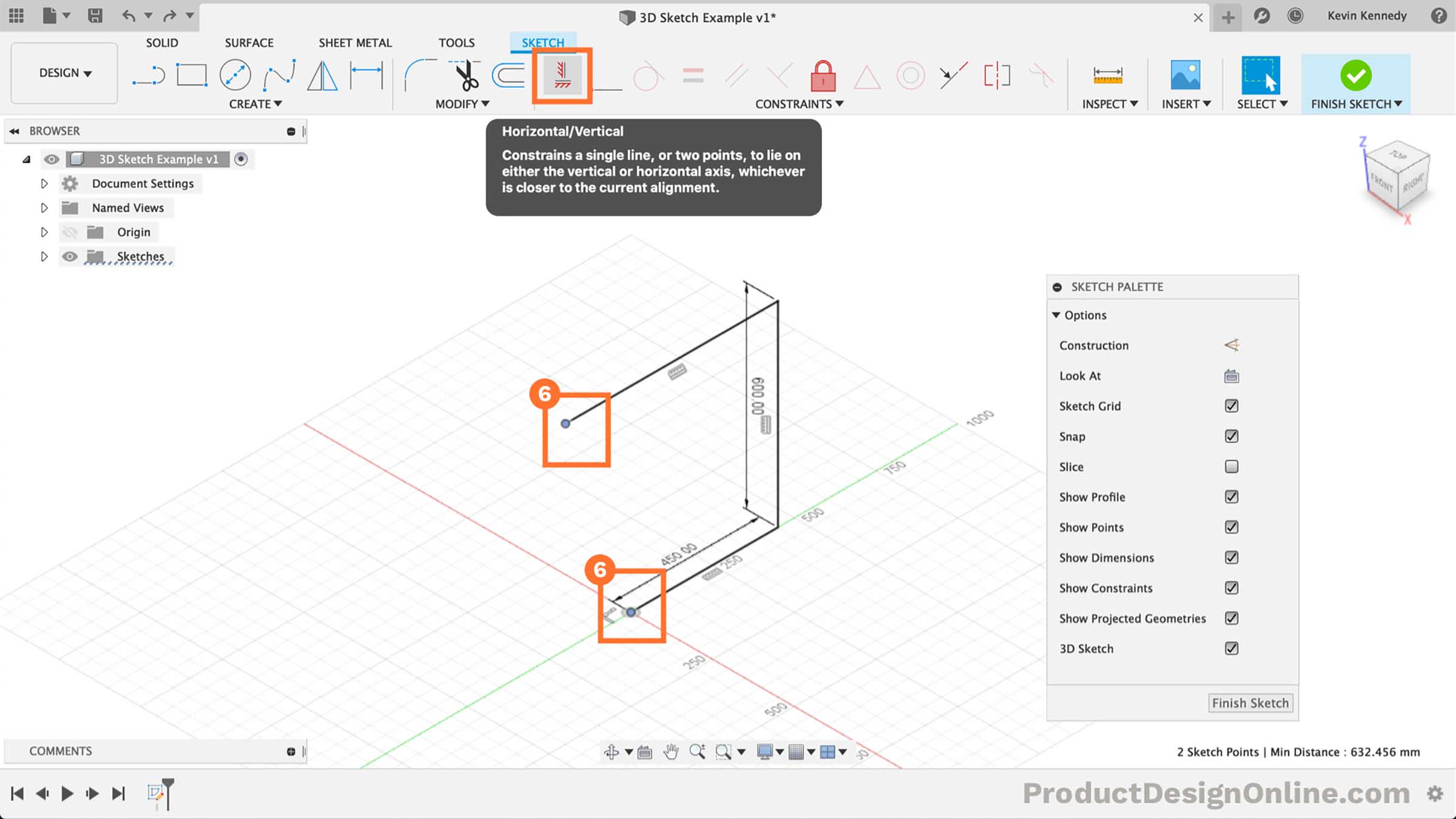
- Reactivate Line Command
Select the line characteristic in the toolbar. Select the endpoint of the line nosotros just placed.
The 3D sketch planes and manipulators volition reappear once you select the endpoint.
For this line, we'll blazon out25cm for the width. Make sure to snap the line in place forth the scarlet x-centrality.
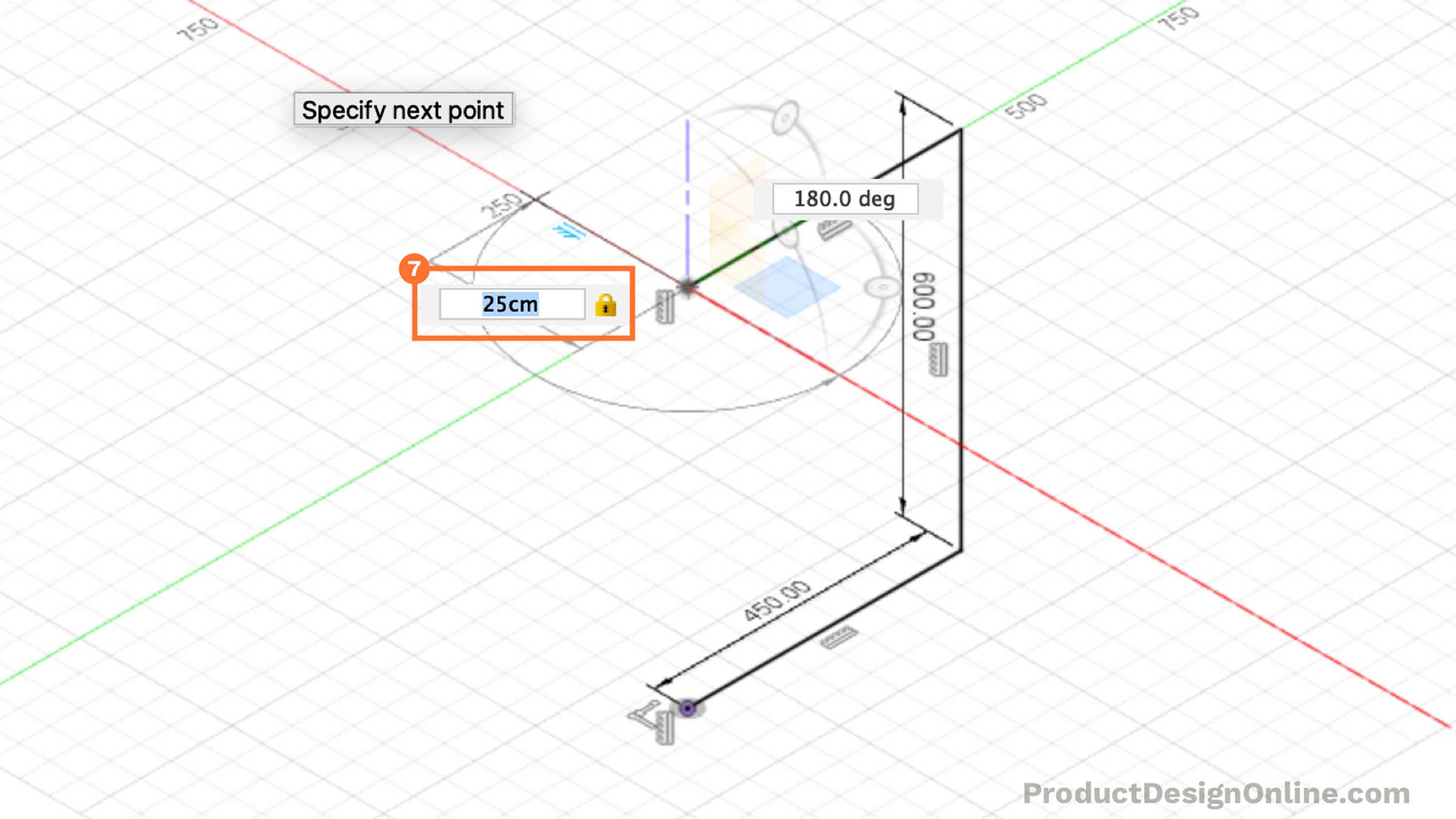
- Heading Back to the Right
Nosotros'll now want to create a line heading back to the right.
Since we've already divers our length, we'll want to utilize sketch constraints instead of sketch dimensions for this one. Click along the green y-axis where the line snaps in at the same length of the opposite line.
Hit the "Escape" key on your keyboard. Shift-click the endpoint of this line and the contrary line. Select the "Horizontal/Vertical" Constraint in the toolbar. This will strength the line to stay the same length.
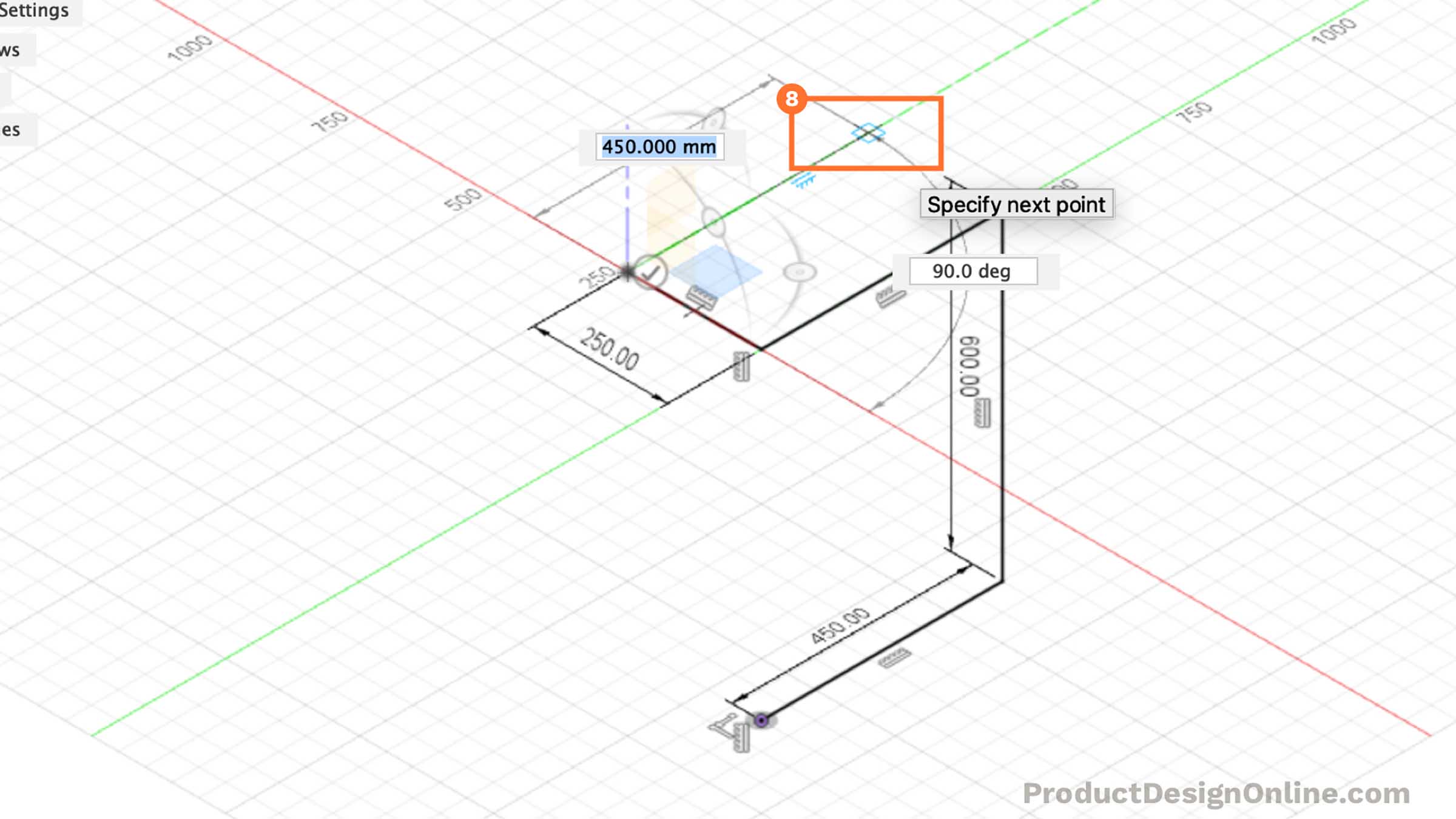
- Heading Straight Downward
Reactivate the line command in the toolbar. Select the endpoint of the concluding line we created.
Heading straight down, click to place the line along the blue z-axis where it snaps equidistant to the opposite line. The line should be 60cm.
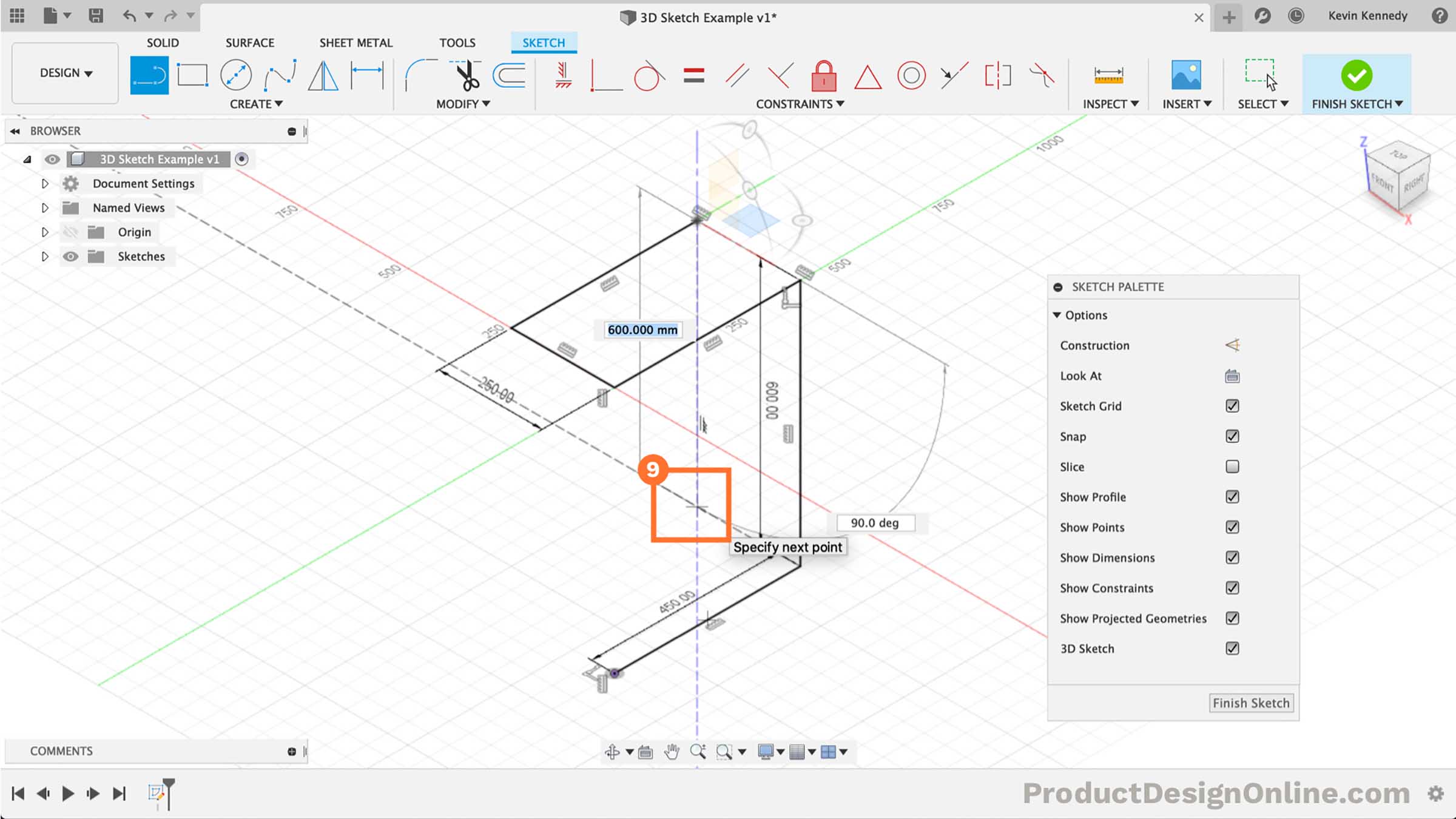
- Finishing off The Lines
Let's end off the lines by mimicking the "C" shape on the opposite side.
Place the showtime endpoint at the red y-axis. Create the second line past clicking the origin point.
Hit the "escape" key to clear the line command.
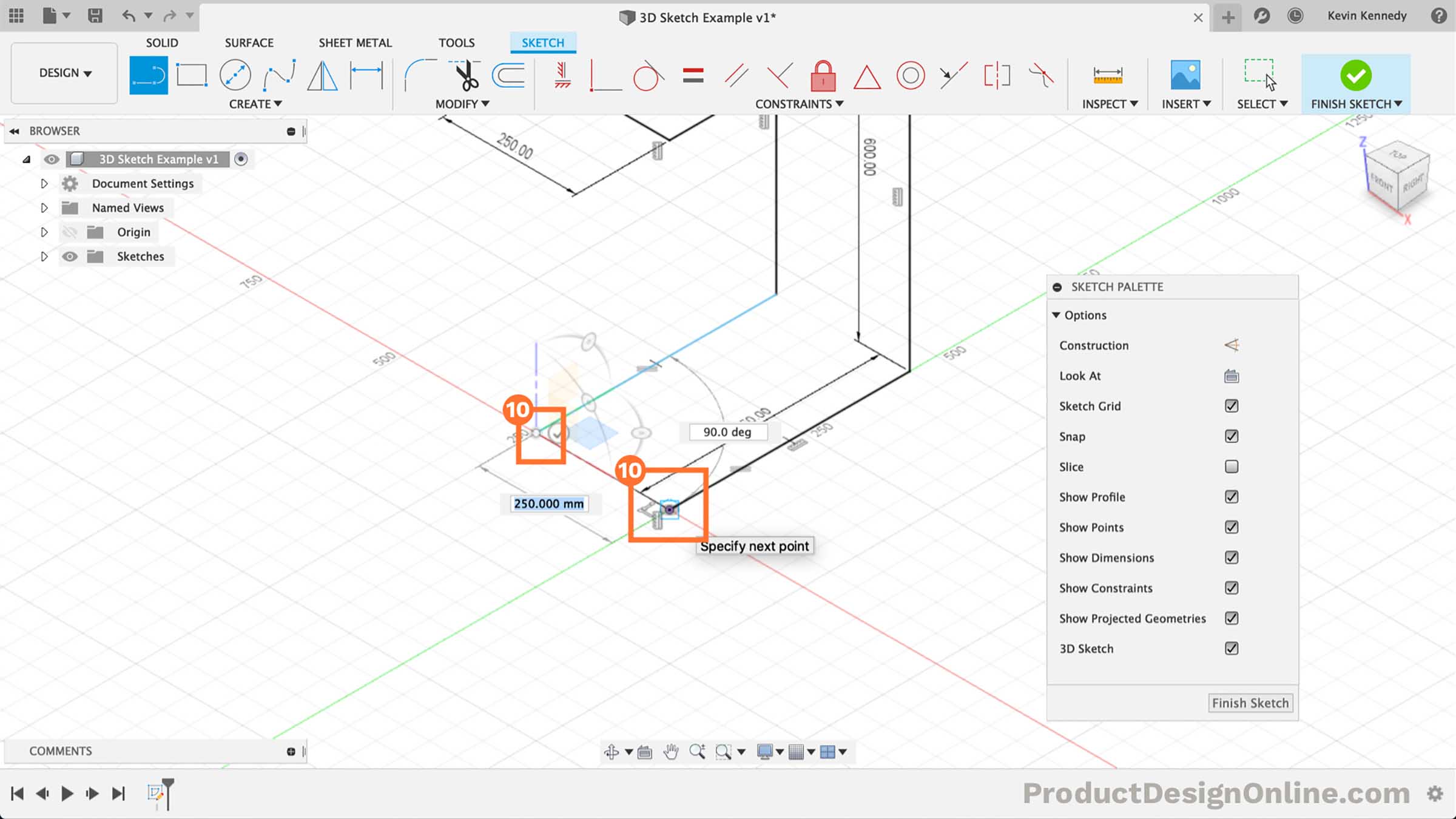
- Adding the Last Constraints
To ensure our sketch is fully-constrained, we'll need to add the final constraints.
It appears the terminal line created does not have a constraint forcing information technology to remain in one direction. Just select the line then select the "Horizontal/Vertical" constraint in the toolbar.
Our sketch is now fully-constrained. We can double-check this by looking for the red lock icon next to the Sketch proper name in the Browser.
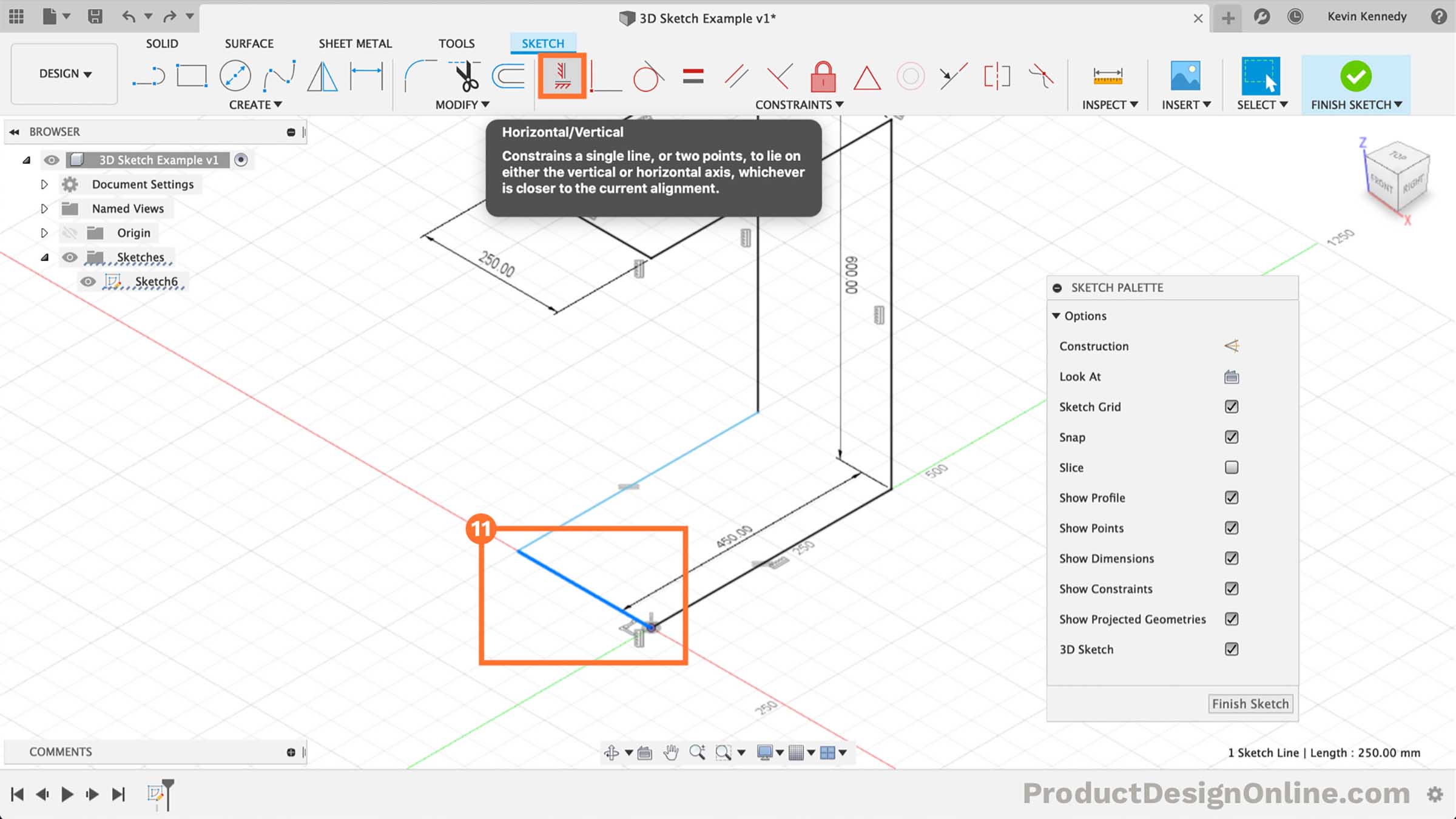
- Turning the Sketch into Pipes
Our sketch is now complete. We're ready to use the Pipe command to turn the sketch into furniture.
Select theSolid tab in the toolbar. SelectPipage from theCreate dropdown. Select the 3D sketch geometry.
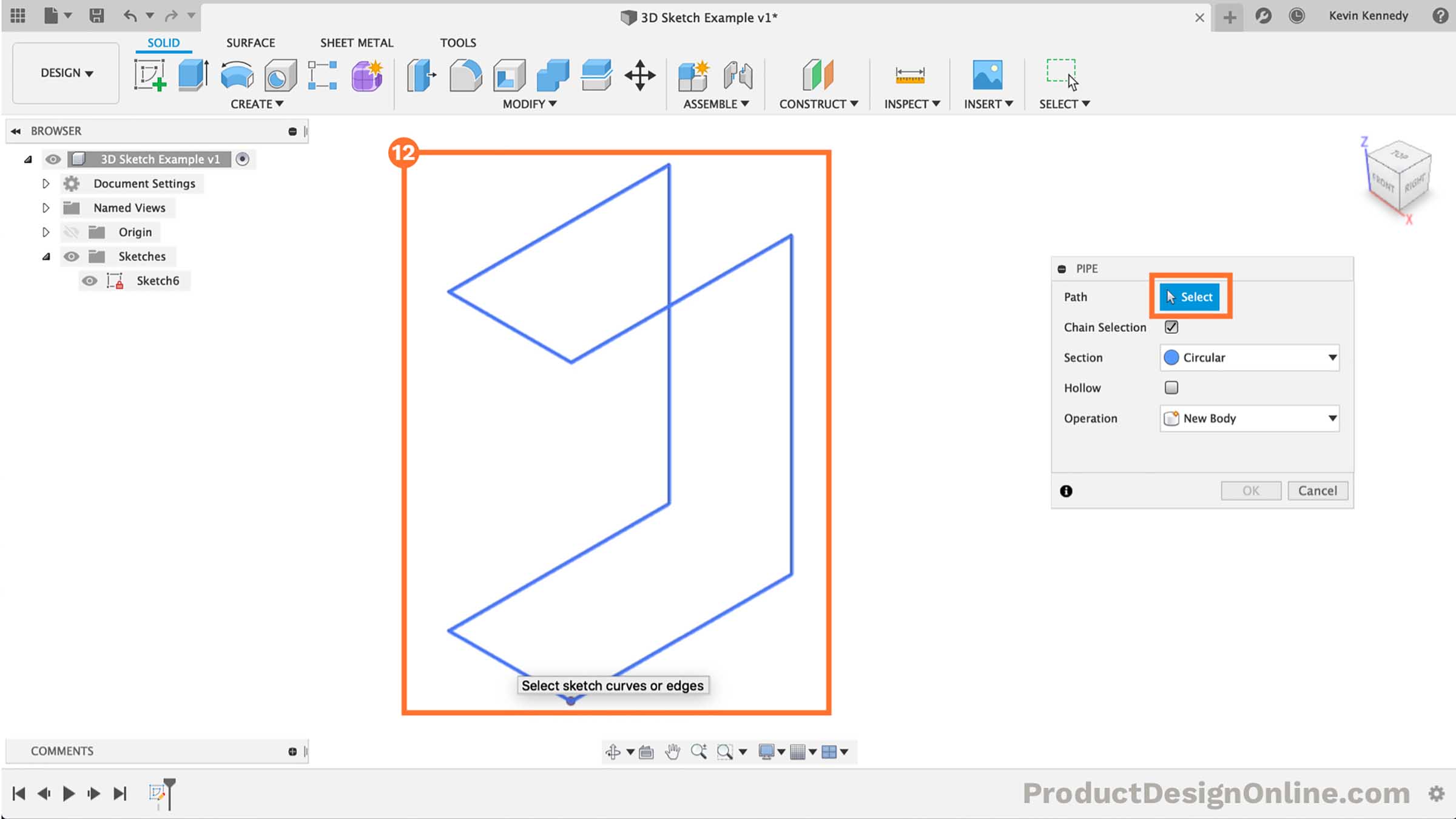
- Adjusting the Pipe Features
Nosotros'll want to gear up theSection blazon toFoursquare. We can besides modify the thickness of the pipe by changing the department size.
I've enteredii.5cm for thesection size.
Select the "Hollow" checkbox, which displays thesection thickness. For the section thickness type out2mm.
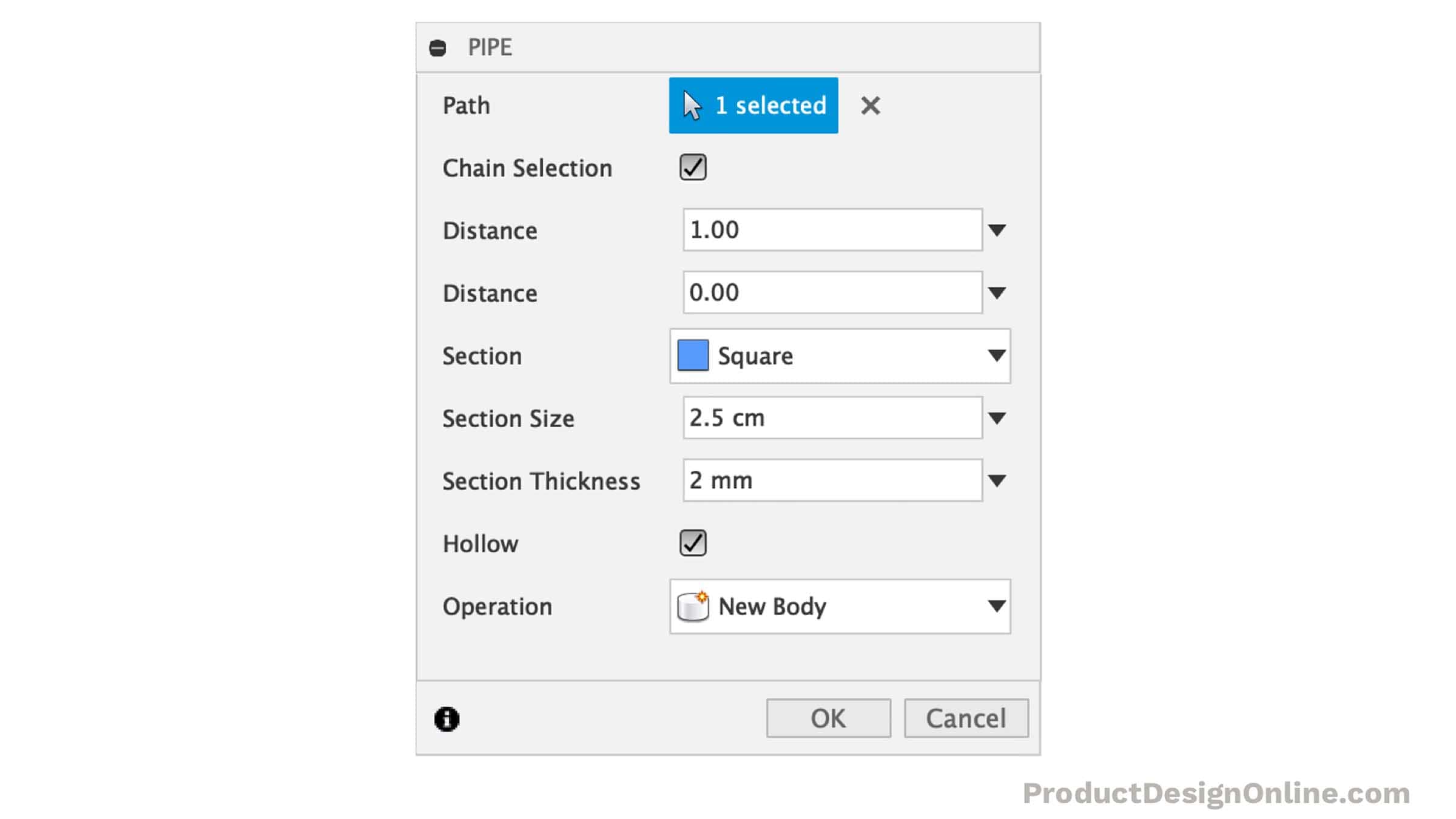
- Congrats and Next Steps
You lot've at present completed the 3D Sketch! Finish off the model by adding boards to the pinnacle – or whatsoever surface yous desire!
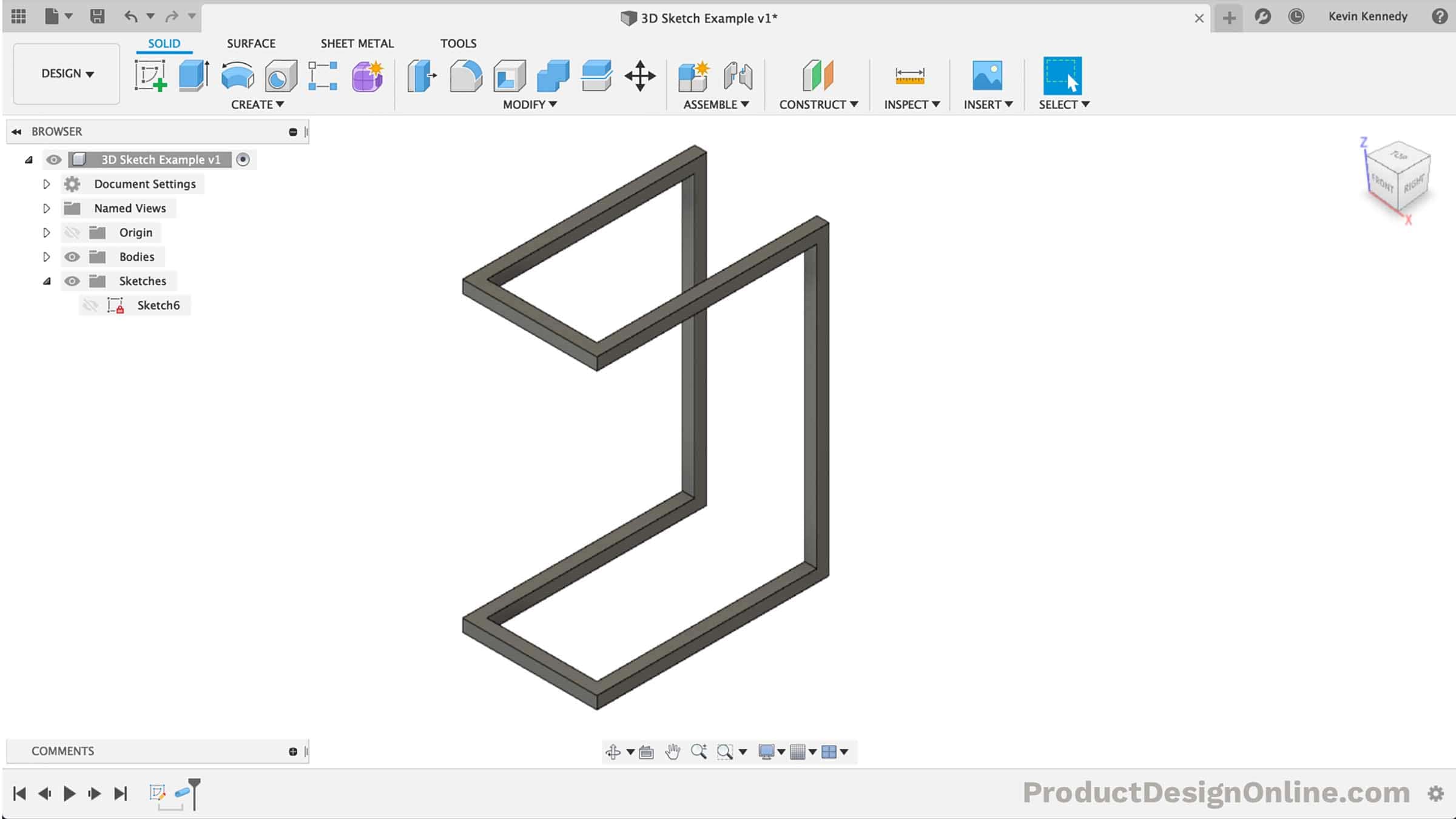
Source: https://productdesignonline.com/fusion-360-tutorials/introduction-to-3d-sketching-in-fusion-360/
0 Response to "why are my 3d fusion 360 drawings printing thinly"
Enviar um comentário